Future-proof cultivation and improvement
By producing healthy seed potatoes, we can make a substantial contribution to the world's food supply. Just think, the seed potatoes you put in the ground account for 25 to 50 times the volume of ware potatoes. So our production has to be more than up to scratch. That is why we are looking at future-proof measures with our growers. In doing so, we reduce the impact on the environment and surroundings and improve production. Together with our growers, we thus strengthen the basis for a sustainable food chain, taking responsibility for reducing the ecological impact and contributing to a stable food supply for future generations.
Future-proof seed potato cultivation expands
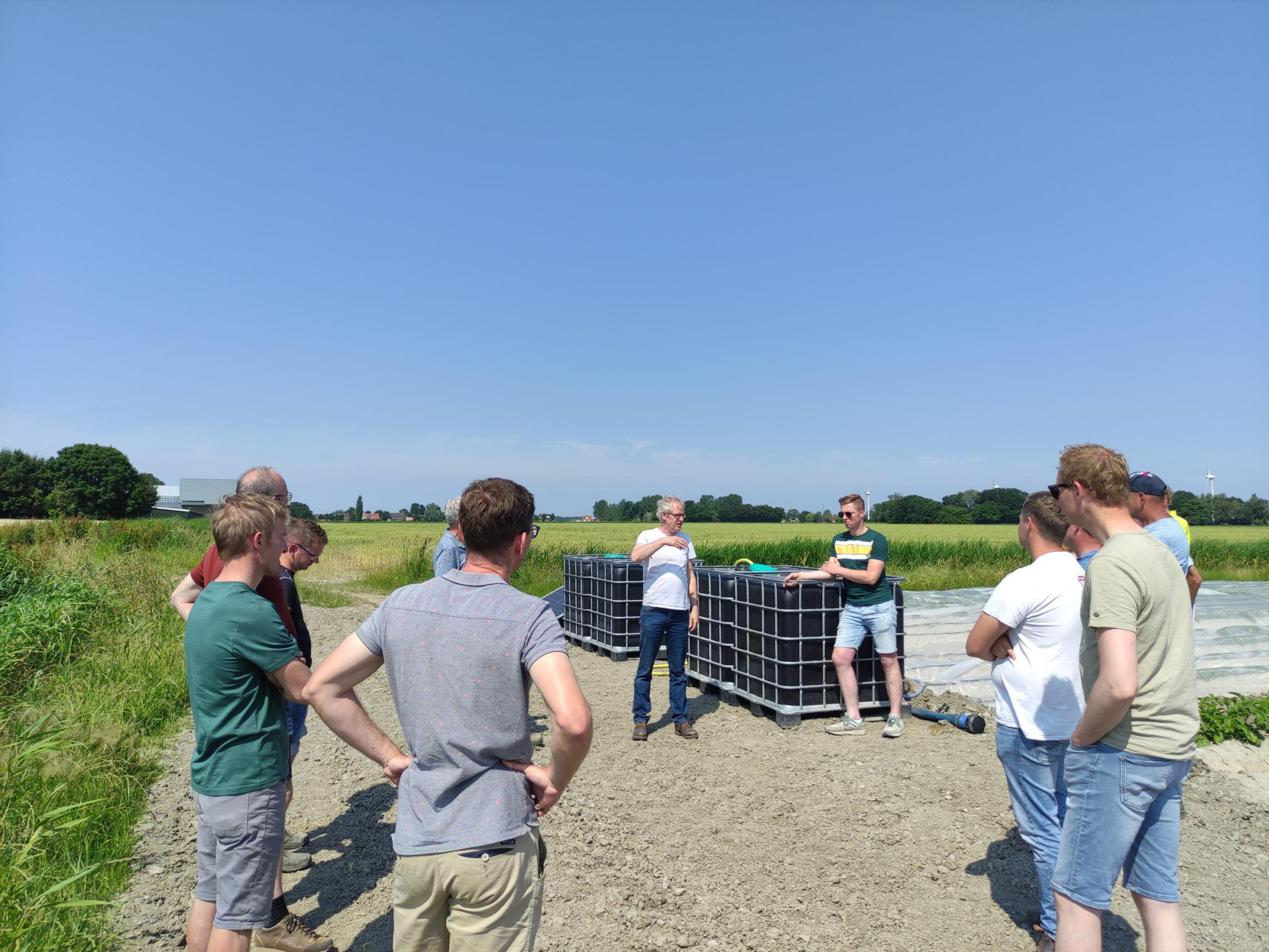
Growers love to learn from each other's experiences and that is the premise of the Future-proof seed potato cultivation growers’ group. In this setting, 14 growers explore the practicalities of what future-proof cultivation could look like. This approach is having an impact, which is why a new growers’ group was formed in the northern Netherlands in June 2025. Success largely depends on the group and mutual trust. At Royal HZPC Group B.V., we guide the group, provide input and invite experts to provide support.
In growing season 2024, about 50 growers in the Netherlands took specific cultivation measures to control viruses. Among these growers, 93 hectares of seed potatoes were covered with straw, barley was used as an under-sowing on 18 hectares, and 23 hectares were grown under gauze covers.
We want to bring more growers together. The greatest impact is realised when they can get to work themselves, discuss with each other how to improve cultivation, and be open about their experiences.
More needed than resistant varieties
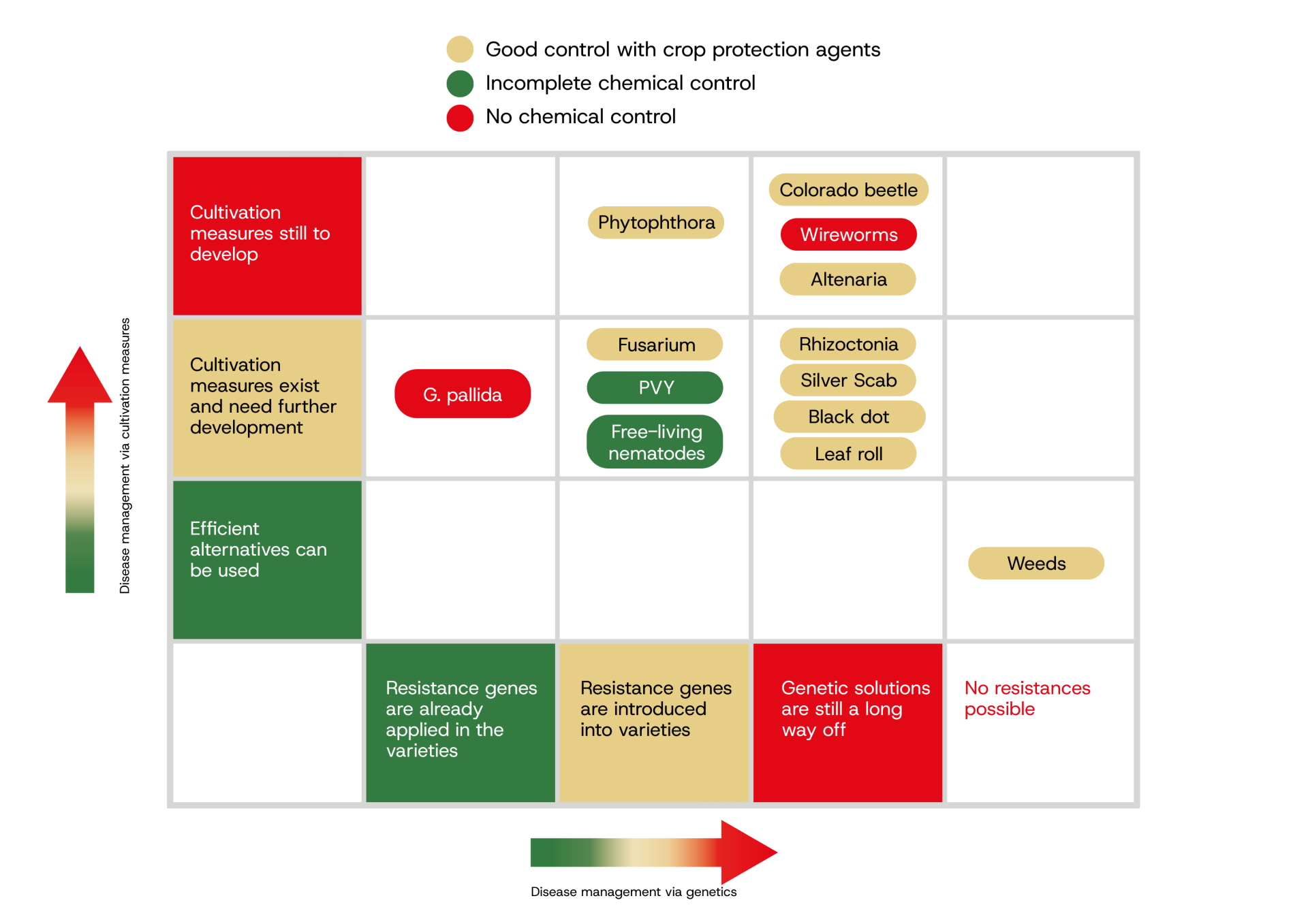
How can you optimise seed potato cultivation so that you still have good yields but reduce the use of resources? That is the question that Integrated Crop Management (ICM) answers. The genetic advancement of varieties with great resistance packages certainly helps, but more is needed. We need to work on improving cultivation measures to keep crops healthy. Not all cultivation measures have yet been examined and applied; it's about using resistant varieties at the right time and in the right place to achieve a good performance. Without the right cultivation measures, there is a high chance the resistance will be overcome so you are always one step behind.
Vision on seed potato cultivation
Our vision for seed potato production is to reduce the reliance on chemical pesticides while maintaining yields in both quality and quantity. We are doing this by introducing integrated crop management (ICM). We have already identified the biggest threats: virus, fusarium, rhizoctonia, wireworms and silver scurf. For each subject area, there is a working group where theory and practice come together from various disciplines.
From a targeted to an integrated approach
Crop protection agents are a targeted approach, while ICM is an integrated variety-specific approach, using different crop measures. This might include, for example, the cropping plan and the rotation of crops. All these cultivation measures combined should ensure that the resilience of seed potatoes is enhanced.
There are so many measures and opportunities within ICM, where do you start and what steps do you take as a grower? We help make that transparent, so we can offer knowledge to the grower in a more focused and tailored way.
More data-driven working
Integrated Crop Management (ICM) requires the organisation of the knowledge we have about crop measures. With the increased complexity of ICM measures, we need to be data-driven, offering complex information to the grower and enabling the grower to share cultivation data with us. To this end, we can use supporting software such as a Decision Support System (DSS) app which offers daily support to growers at variety level, throughout the cultivation cycle. Our goal? Sustainably improve yield and quality. Input from growers ensures the knowledge base is constantly enriched and improved, continuously improving the advice in the DSS app. A key milestone was the launch of the DSS app specifically for small-scale farmers in East Africa with less than 1 hectare of land, in December 2024. In May 2025, a DSS app was introduced to larger growers in Canada.
It is impossible to regularly visit farmers in East Africa in person and provide help on site. Thanks to this app, they can learn the basics and we can reach out and help them move forward in one go.
Finland as a producer of basic seed potatoes
The basic seed potato supply in the Netherlands is under pressure, partly due to diseases, but neighbouring countries depend on it. Our basic seed potatoes (the higher grades) form the starting material for commercial seed potatoes and that is a risk. We are now expanding basic seed potato production in northern Finland at a site officially established as disease-free (these sites are called High Grade Regions). There, we can ensure higher quality and a better success rate. That does require Finland to be positioned as a producer of high-quality material the quality of which meets the stated requirements of our customers.
Fewer transport movements, lower CO2 emissions
One way to reduce CO2 emissions is to reduce transport movements. We want to transport our potatoes to the right place with a reduced impact on the environment. To this end, we have developed a plan which is part of our CSR approach.
Update to the Plant Reproductive Material Regulation
Legislation around the Plant Reproductive Material (PRM) regulation is being further formulated and defined in Brussels. The legislation is expected to be ready by 2026 at the latest and the Netherlands then has three years to implement it. PRM is expected to prescribe standards at the European level which are more flexible than the current quality standards in the Netherlands. The question is how do we ensure alignment? Do we stick to our own level of quality or do we go with the lower standards?
Partner in the spotlight - Bilal Basheer - Chief Executive Officer at Frozena Foods in Egypt
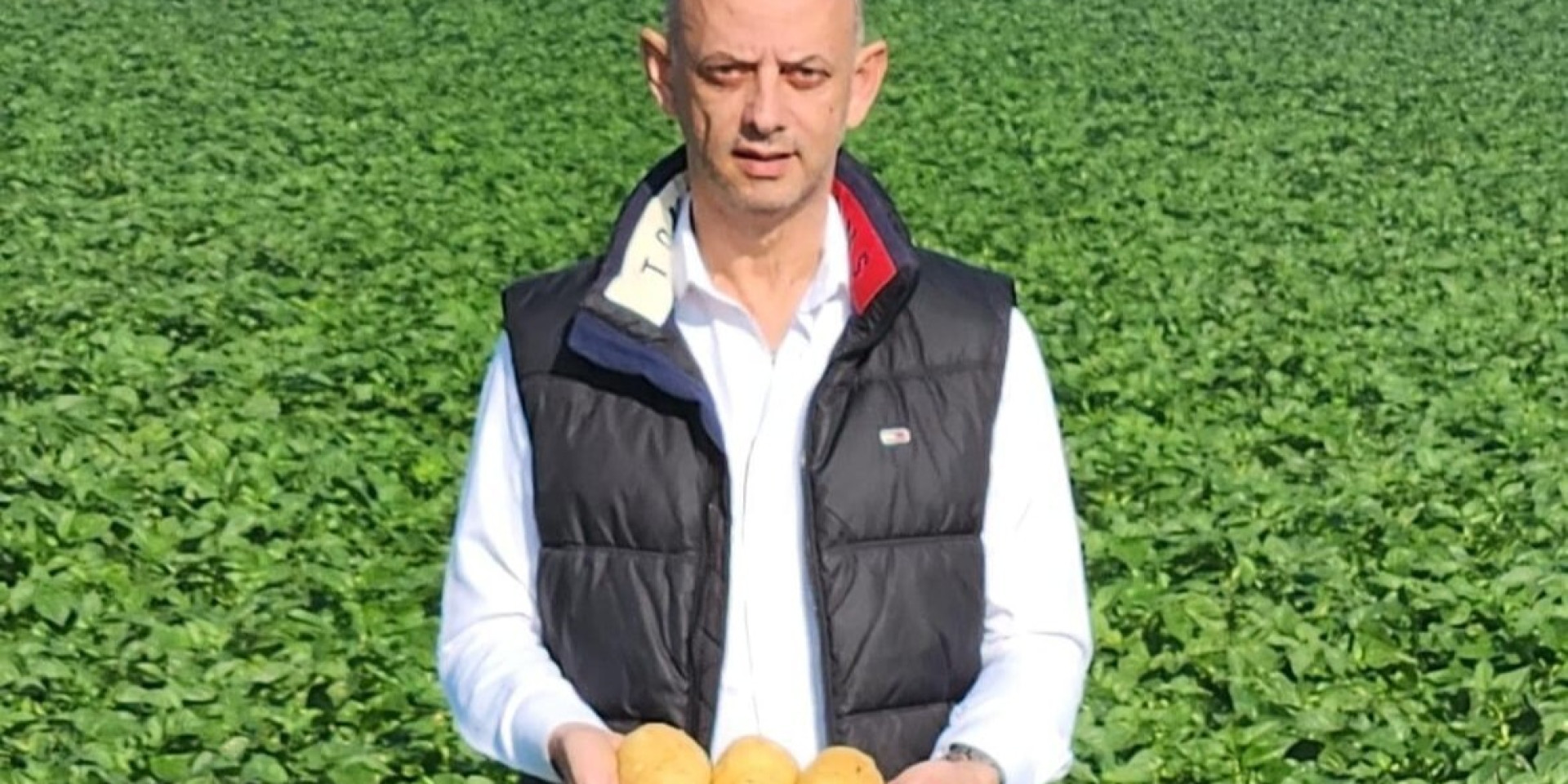
Partner in the spotlight - Bilal Basheer
CEO at Frozena Foods in Egypte
What does Frozena Foods do?
"Frozena Foods produces frozen potato products in all shapes and sizes. With our agricultural arm Tazweed for Agricultural Crops, we have over 4,000 hectares of farmland in Al-Farafra and Wadi Al-Natroun. Every year, we produce 40,000 tonnes of fries and 3,500 tonnes of potato flakes for both the local market and for export. We export to the Middle East, Latin America and Asia; our fries are on sale in 30 countries worldwide."
What does potato cultivation look like in Egypt?
"Potatoes are mainly grown in the Nile Delta. They are also grown in some reclaimed desert areas. In Egypt, areas of the desert have been turned into agricultural areas as Egypt tries to create more fertile land outside the traditional agricultural areas around the Nile. We have two growing seasons: fries potatoes are a winter crop and are planted in autumn and harvested between January and April. And the seed crop is a summer crop. That is planted at the beginning of the year and harvested in May or June."
Which HZPC varieties do you grow?
"We have been working with Asterix for four years now, started working with Quintera two years ago and, last season, we tested Cardyma and Innovator."
In Egypt, we have a hot and dry desert climate.
What characterises the climate in Egypt?
“In Egypt, we have a hot and dry desert climate. Winters are mild and summer here is extremely hot and dry. We have very little rain and, in the desert areas, it may not rain for years. But, we have no shortage of sunshine. The sun shines here all year round."
What are the biggest challenges?
"The limited availability of water is our biggest challenge and irrigation costs are increasing. We are also facing climate change in Egypt. It is getting hotter and droughts are longer and more intense. Soil quality is also deteriorating and the costs for fertilisers, fuel, electricity and machinery, for example, are increasing significantly."
How do you deal with the very hot and dry periods?
"We try to plant very early in the season, to avoid the extreme heat as much as possible. We also use irrigation planning to determine when the crops need water, and how much. This allows us to use water as efficiently as possible while ensuring that the potato plants get what they need."
Our biggest challenge is the limited availability of water.
Why is that so important?
"Water scarcity is an increasing problem in Egypt and the demand for water is only set to increase because Egypt's population is growing substantially. Water in the Nile is an important resource, but we need to share that with other countries where water availability is also limited, such as Sudan and Ethiopia."
Are there rules for water use?
"The government has put rules in place to prevent the overuse of water, particularly in the reclaimed desert areas. There, water is even scarcer and we need to use water really efficiently."
So, how do you find enough water?
"In the fertile Nile Delta, we can use water from the Nile. In the reclaimed agricultural areas in the desert, we draw water from underground water sources. We deploy centre pivot irrigation; a system where a long tube with nozzles rotates in a circle around a fixed centre. This allows us to spray large agricultural plots in a targeted and controlled way. We are also investigating methods for using water even more efficiently and making cultivation more sustainable by using varieties that give good yields with less water."