Major step forward
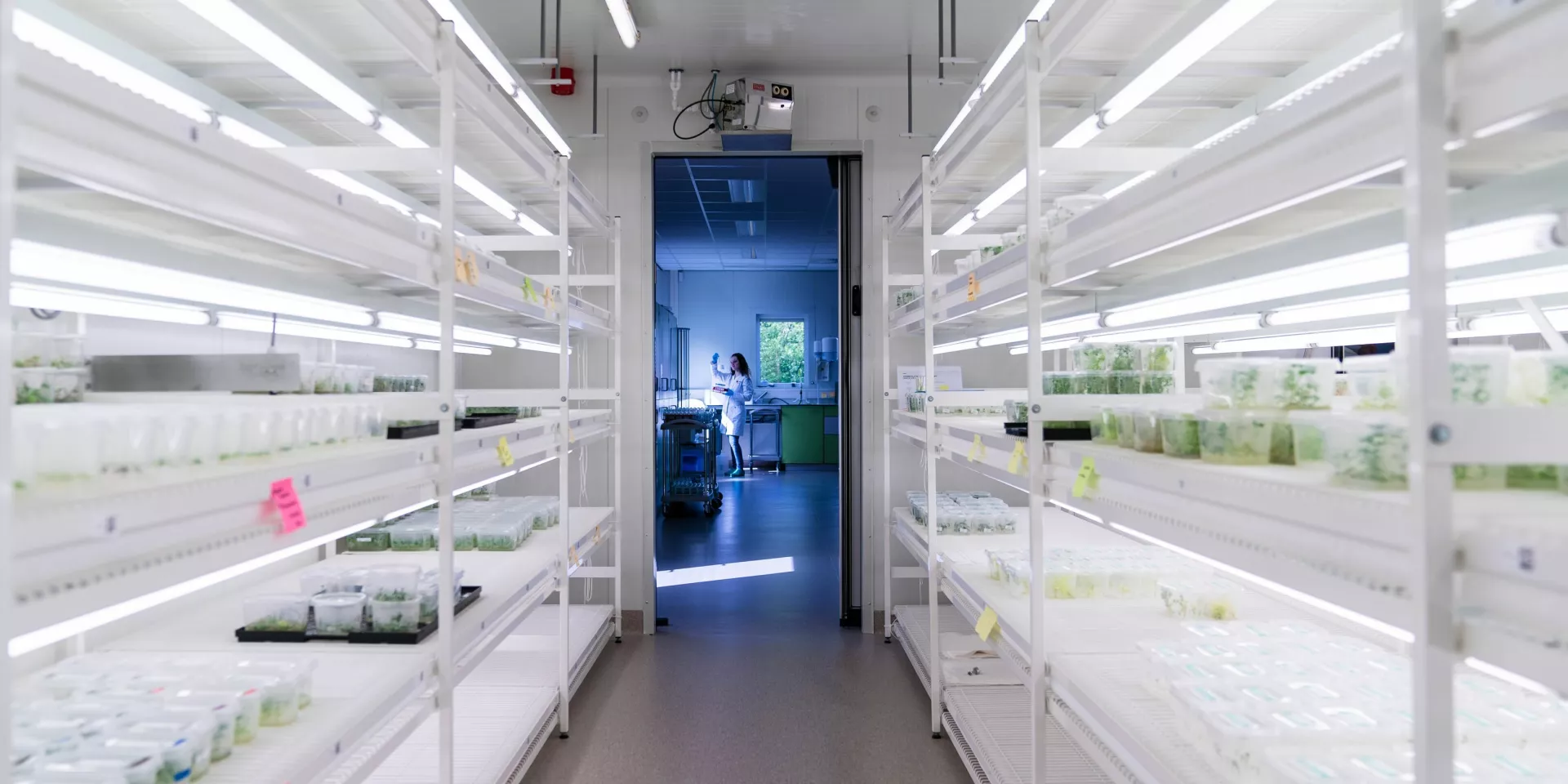
Resilience Revolution, our current theme, has been going on in our breeding programme for years. The concrete results are increasingly taking shape, with new varieties and major developments in hybrid breeding, supported by data-driven breeding to take the biggest step forward. We accelerate where we can and seek collaboration because new, robust varieties with excellent resistance packages are not enough.
Yield as an important guideline
When we are breeding, we always have yield in mind. This encompasses the success of a consumer crop and the yield from seed potatoes in both financial and tonnage terms but also, increasingly, in terms of social returns. How can our varieties contribute to sustainability goals? In 2017, we set key CSR targets on resistance to potato virus Y, phytophthora, fusarium and nematodes, among others. We identified the risk of erwinia infection and improved the period of dormancy for new varieties. We are taking important steps forward by focussing on these goals. This means that other company departments and growers also have to make adjustments, such as storing seed potatoes at a warmer temperature to ensure the longer period of dormancy does not come at the expense of emergence.
New names in the variety portfolio
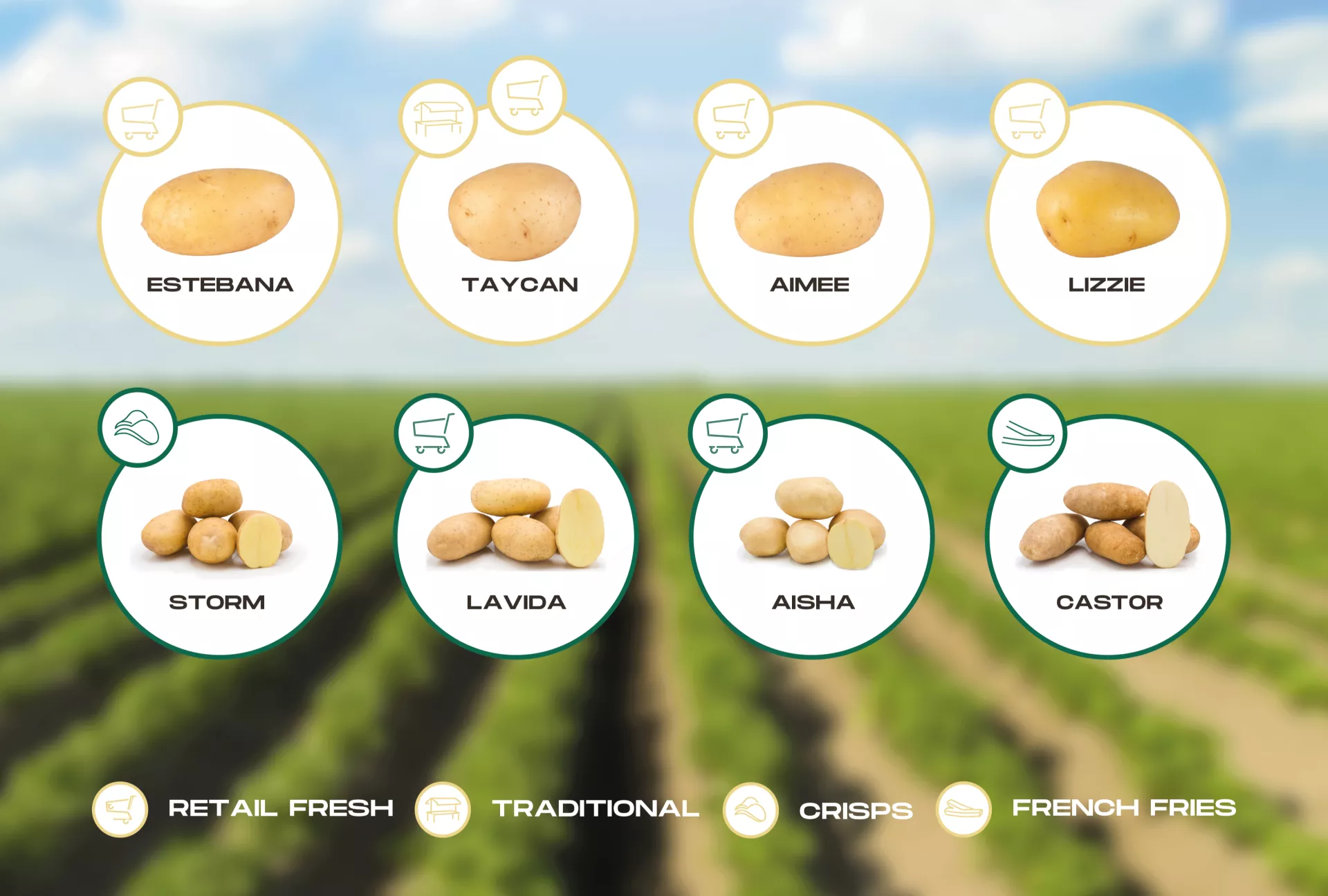
In 2024-2025, we will add new names to the variety portfolio of HZPC and STET. These new climate robust varieties are the result of our investments in stress tests, molecular markers and data models. They all have impressive resistance packages. Developing robust varieties resistant to climate stress is a cornerstone of our policy, contributing to sustainable food production and a resilient future.
Estebana HZA 13-1642: Fresh
Taycan HZA 14-1447: Fresh Retail and Traditional
Aimee HZA 14-2102: Fresh
Lizzie HZD 11-1735: Fresh
Storm STT12-873: Crisps
Lavida STT11-3542: Fresh
Aisha STT10-6777: Fresh
Castor STT12-400: Fries
Fully data-driven intersections
We are increasingly using data and ensuring data quality assurance. All our crossings are now data-driven. Breeding used to be a matter of knowledge and luck but now we can make much more targeted choices thanks to data models. This increases the chances of making faster genetic steps forward.
Hybrid variety candidates
We are testing hybrid varieties in trial fields in Kenya. These hybrids are an improvement over local varieties for small-scale growers. We must still make progress for the professional market and expect to announce one or two variety candidates with double phytophthora resistance next year.
In terms of hybrid breeding, we have now met the milestones we set back in 2011. And that's a real achievement.
New breeding technology: an additional tool
In 2023, the European Union (EU) approved the use of new breeding technologies (NBT), provided they allow you to develop varieties that could also be obtained from classical breeding but at an accelerated rate. The trilogy is currently being conducted and legislative proposals are being negotiated behind closed doors. Final legislation will not be in place until spring 2027 at the earliest.
We welcome the opportunities, but we do not see NBTs as the holy grail. It is primarily an additional tool for our breeders.

More than just breeding is required
In breeding, we are taking the necessary steps to develop superior varieties with robust resistance packages. But resistance alone is not enough, and breeding is a time-consuming process. By applying highly targeted crop protection, we can inhibit the adaptability of viruses and diseases. In short, we must continue to preserve our sustainable varieties to maximise resistance.
New varieties, crop protection and integrated crop management: all three are needed for the future of potato cultivation.
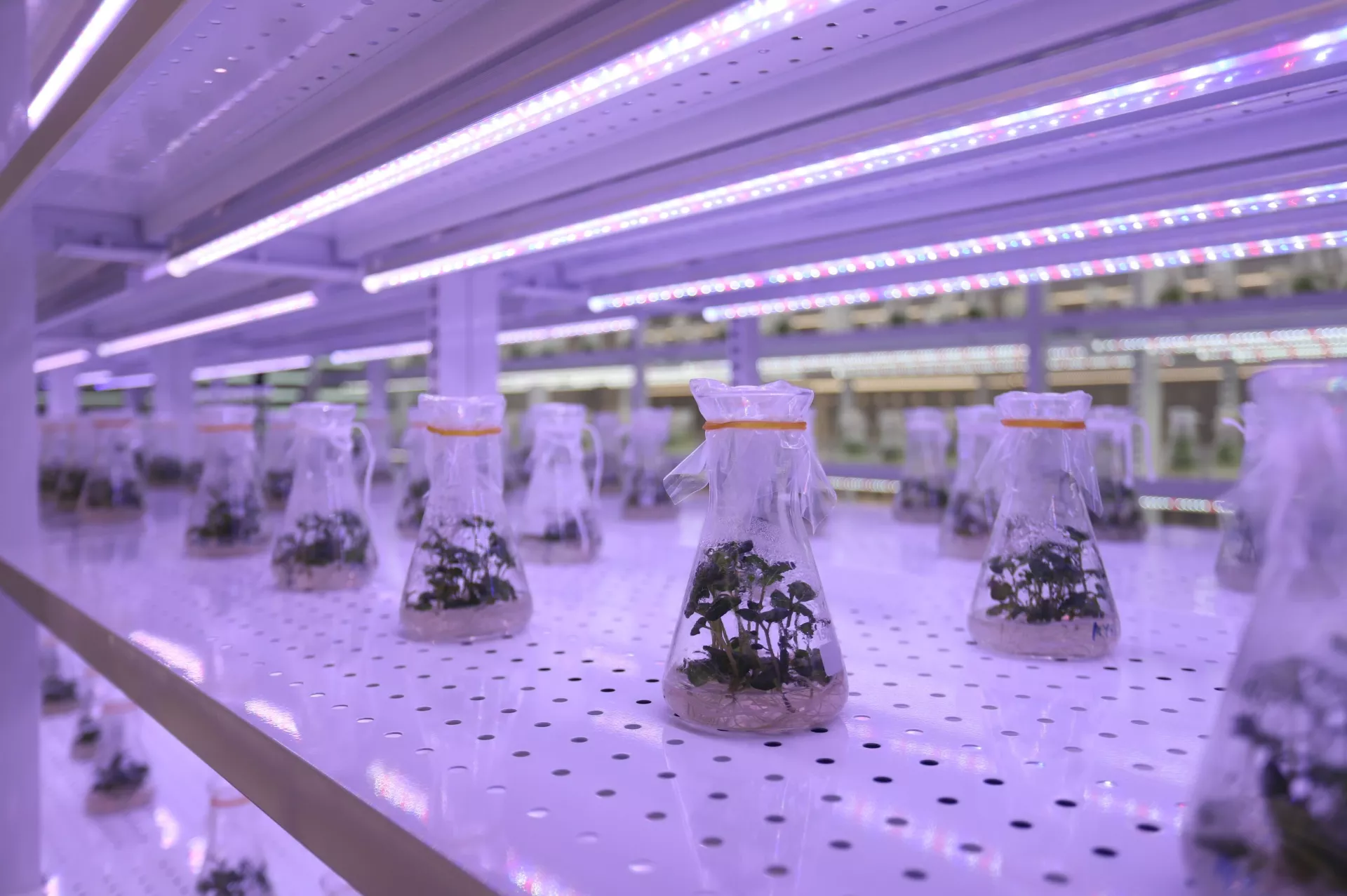
Strong interest in universal variety set
When we made the universal variety set available to universities for basic research in January 2024, we did not know what to expect. We can now regard it as a success and there are six universities and institutes using the set. Thus, we are contributing to accelerating potato-oriented research in science.
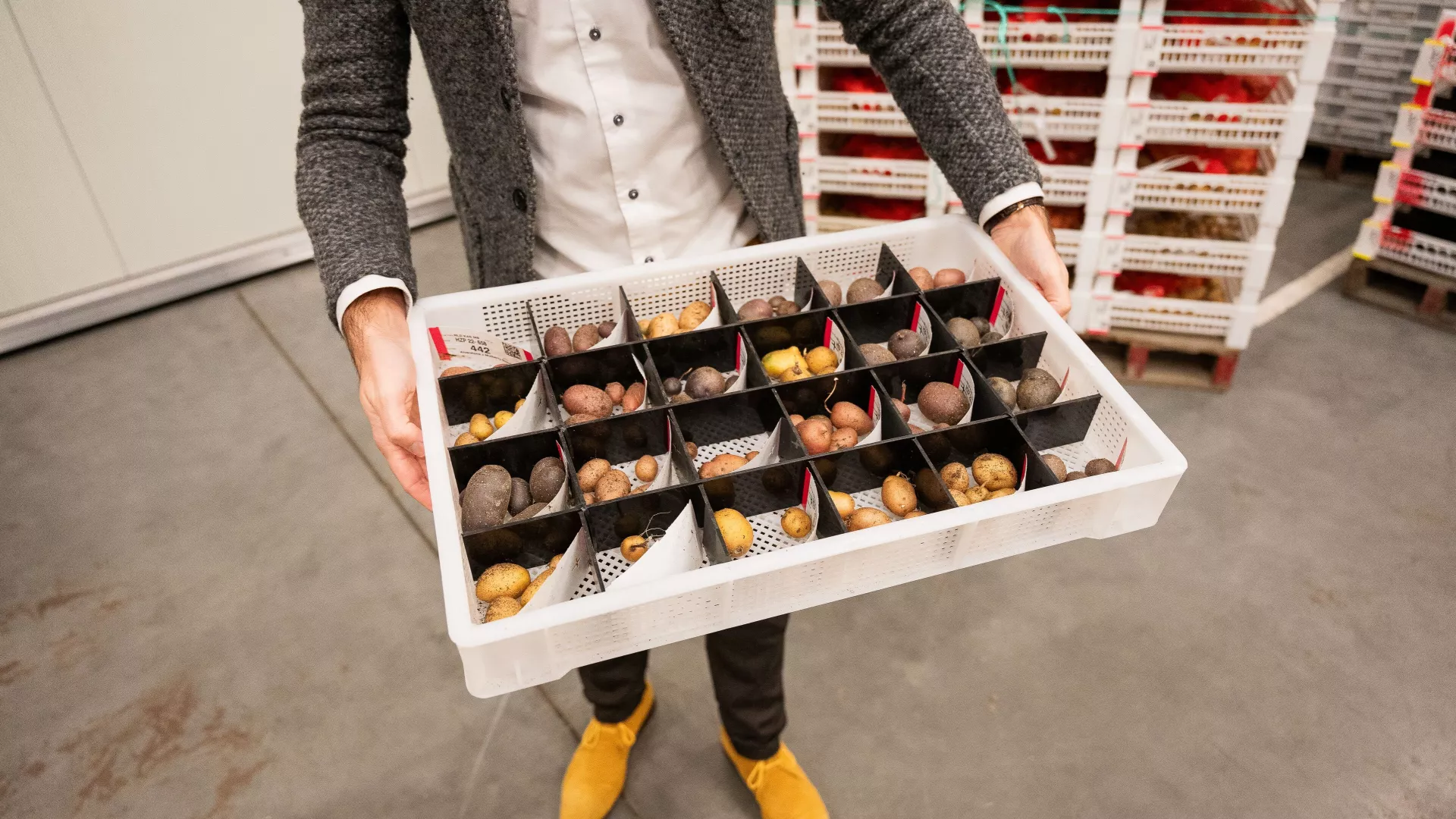
CropXR
CropXR (XR stands for eXtreme Resilience) is a comprehensive data-driven project focusing on smart consumer breeding and genetic models. Royal HZPC Group B.V. is a member of the Holland Innovative Potato (HIP) partnership. Within HIP, we carry out joint research in CropXR on how to make potatoes even more resilient to drought and nitrogen.
European research project ADAPT
Together with Wageningen University & Research and Utrecht University, we are participating in the European research project ADAPT. We are investigating how potatoes respond to stressors such as heat, drought and floods. We will feed the results of the survey into our own research program.
Partner in the spotlight – Paul Melis Senior Director of Global Agriculture at PepsiCo
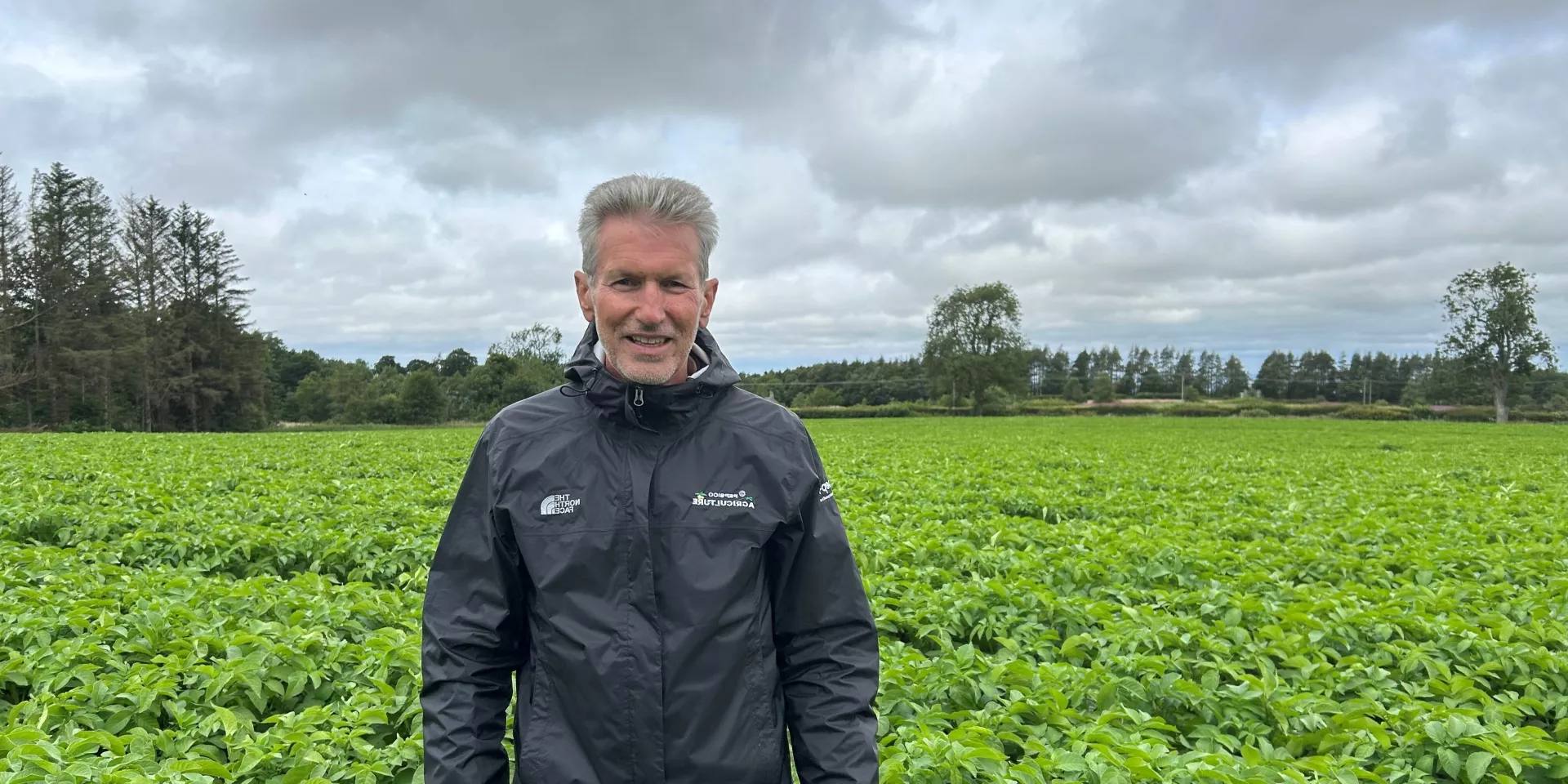
Partner in the spotlight – Paul Melis
Senior director global agriculture at PepsiCo
What exactly do you do as Senior director global agriculture?
"Our global agriculture team deals with strategic themes within global potato production: variety development and introduction, seed production, digital systems and data processing, productivity and training of agronomists. I am responsible for improving seed potato production. We are currently developing, for example, a tool to understand the five-year planning of seed potatoes in each country around the world. And we are using 'geospacial' data to look at where local seed potato production could be used in regions where we currently rely on imports."
Sustainability is an important issue. How does PepsiCo put this into practice?
"Positive Agriculture is an important part of our PepsiCo Positive strategy. That includes the sustainable procurement of crops, and encouraging regenerative agriculture. This concerns water use, reducing CO2 emissions, soil health and biodiversity. The third theme is structural improvement of the living conditions of everyone working in the agricultural sector. We look not only at the environment, but also at economic and social aspects. And that includes a fair price for growers."
We do not see potatoes as a commodity, but as a strategic crop.
PepsiCo is closely involved in the entire potato chain. Why is that?
"Unlike many other companies in our sector, we do not see potatoes as a commodity, but as a strategic crop. That is why we are involved from variety development and seed potato cultivation to the sale of chips. We contract our potatoes directly and therefore have direct contact with growers and cooperatives. All our growers are certified. This demonstrates that they meet requirements in terms of sustainability and livability."
How does Royal HZPC Group B.V. fit into that picture?
"The collaboration between our organisation started when STET took over Van Rijn/KWS. Van Rijn/KWS' crisps variety VR808 was exclusive to us at the time. Two more varieties, that are perfectly suited to our vision of the future, have since been added. We also use other varieties, which are not grown just for PepsiCo. We share knowledge, we test new varieties and work together on variety introductions."
You recently visited HZPC Research in Metslawier. Why?
"We talked about how we can expand our cooperation. There are synergies to be found in certain areas; Royal HZPC Group B.V. has a highly advanced breeding facility, we have a large global network and crisps potato production. So this offers opportunities. Multiple resistance is very important to us. Thanks to its advanced marker technology, Royal HZPC Group B.V. has a very good breeding programme for crisps potatoes."
Our cooperation is all about openness and mutual understanding.
What does the collaboration look like in concrete terms?
"We need varieties that are as sustainable as possible. These must offer great yields while growing with as little water as possible, the lowest levels of pesticides and emitting low levels of CO2. There are new HZPC varieties that already comply with these requirements and there are still some in the pipeline. Royal HZPC Group B.V. does the selection and testing, our R&D department helps. If a variety seems to have potential, we will collaborate on how best to deploy it globally."
What will happen in the future?
"I think our collaboration will continue to expand in the future. Our cooperation is all about openness and mutual understanding. We take each other's interests into account and pull together to meet challenges. This sense of 'business understanding' is crucial, now and in the future."